Wednesday, July 30, 2014

LAMPLIGHTER at the TRON GLASGOW

In conjunction with the Commonwealth Games there have been various cultural , artistic and musical festivals all around the city with the theme of Home Nations Festival with stories of all the nations of the Commonwealth coming "home" to tell their stories for all to share and take back to their homes.

One such performance was Jackie Kays The Lamplighter which took the audience on a journey through the dark heart of triangular trade of weapons ,slavery and sugar/tobacco. it features four women and a man tell the story beginning with the anguished tale of an eleven year old girl , the hideous perils of transportation in slave ships, the harrowing life on the plantations, and the genuine dark heart of the  growth of the British cities and the industrial revolution.

This Guardian article by the author gives the background research taken by the author
 in writing the play.

"I belong to Glasgow, dear old Glasgow town, but, alas, there is something the matter with Glasgow that's going round and round. Glasgow does not readily admit its history in the way that other cities in the United Kingdom have done - Bristol, Liverpool, London. Other cities are holding major events to commemorate the abolition. What's happening in Glasgow? - in the Gallery of Modern Art, for instance, which was originally Cunninghame Mansion, built in 1778, the splendid townhouse of William Cunningham, a tobacco baron? Or in Buchanan Street, the great shopping street, named after Andrew Buchanan, another tobacco lord, or in Jamaica Street, Tobago Street, the Kingston Bridge?
At school, I was taught about the industrial revolution, but not about the slave trade which financed and powered it. I was taught about the suffragettes, but not about the women abolitionists who came before them, and who went on to become them. Jane Smeal set up the Glasgow Ladies Emancipation Society in the 1830s. And as early as 1792, 13,000 Glasgow residents put their name to a petition to abolish slavery. I never learnt, for instance, that the movement to end slavery in the British Empire in the 18th century is probably the first human rights campaign in history."

In this video Jackie Kay discusses the history of six of her poems selected as part of the Scottish Set Text list for National 5 English.


Sunday, July 27, 2014

EDWIN MORGAN DREAMS & OTHER NIGHTMARES at the TRON GLASGOW

Tron Theatre Artistic director states " Edwin Morgan's Dreams & Other Nightmares – Liz Lochhead's play about her friend
and fellow poet Edwin Morgan first appeared at Glasgay! in 2011, a year after
Morgan's death aged ninety. Set in a care home and based around conversations
with Morgan's biographer, Lochhead uses this a jumping off point to look at
Morgan's life as a gay man living a private life beyond his poetry in a vivid
eighty minutes of memory, imagination and poetic longing."

According to the description "Edwin Morgan’s last room in a nursing home in the West End of Glasgow.  Everything’s reduced to the barest essentials, just a bed, a wheelchair and a desk.  On a dark ordinary Friday afternoon in winter, middle-aged James, the poet’s biographer, friend and helper, there to do routine admin with the frail eighty seven year old, hears this urgent question from a deeply disturbed Morgan, who then recounts a series of vivid dreams, nightmares in fact, which have been disturbing him.
Images, poems, remembered lovers, regrets, rough trade, propositions accepted or avoided, truths, desires and lives surround the bed.  James, the listener, is disturbed too, trapped in his task like a reluctant interpreter/psychiatrist/amateur Freudian."

This review is from The Scotsman Newspaper from when the play originally came out earlier in the decade.
"The scene is a Glasgow care-home where Morgan lay dying, in the last year of his life; the key relationship is the one between Morgan and his friend and biographer, a fictional version of the real-life James McGonigal. Morgan feels he cannot write any more, but is suddenly assailed by three vivid and terrifying dreams. He clutches at James, and asks whether he thinks it possible that “a person could live two utterly different lives, without either self being aware of the other?”
Out of that central thought, Lochhead weaves a complex 80 minutes of memory, imagination, conversation, and poetry, in which Davie McKay plays both a lovable Morgan and – with less success – a cheeky, streetwise character who represents the poet’s “life force”. Part tribute to the intensity of a homosexual life that spanned the ages of secrecy and openness, part powerful reflection on Morgan’s modernity and restlessness, and part loving portrait of a city with its own double lives, Lochhead’s play is as rich as it is memorable; and even in its most awkward moments, the three actors – including Lewis Howden as the biographer, and Steven Duffy as a series of lovers – deliver it with a passion and care that speaks volumes, not least about the love that surrounds the immortal memory of Edwin Morgan."
The video below is the "Off The Page" programme featuring Edwin Morgan discussing his childhood and what , for him , was a bad period for Western Poetry post-war.


Tuesday, July 22, 2014

UNDER MILK WOOD at the TRON GLASGOW

Originally written , though never fully adapted , as a play this piece became more famous as a radio audio drama which itself was never adapted as Dylan Thomas passed away before he could return from a sojourn in America before he could complete the job.Thereafter the challenge has always been to get something that only partially translate to the stage in a way the audience can relate to and to bring drama to a radio play which has no grounding tempo.Yet , this can be seen as a metaphor for the lives of ordinary People so the lack of direction and action becomes the unfulfilled drama of the piece itself.

As the review below from the Glasgow Herald states this staging was one of the better ones in which the only real star of the drama , the poetic words of Dylan himself , take centre stage in the tale that is as gladdening as it seems to be humdrum in the time in which it was written with the world settling into a stand-off cold war with the petrifying horrors of the atomic bomb and the slow recovery from WW2 with rations barely returning to pre-war levels still being a concern for the ordinary communities of the emerging post-war world.

" Nicholls takes full advantage of the Tron Community Company's resources to put quaking flesh on the rich bones of Thomas's big, rambunctious symphony of inner yearning, shattered dreams and hidden hopes that the play evolves into.
With the narrator's lines split three ways between the bar staff of Charlotte Lane's wood-lined howf, the rest of the townsfolk either prop up the bar or else sit in repose at a floor of tables until they spring into life to lay bare their hearts desires."


Sunday, June 22, 2014

PAKISTAN V INDIA CHARITY CRICKET MATCH at CLYDESDALE GLASGOW

This was a charity match organised by the UCare Foundation between Scottish Pakistanis and Scottish Indians , the Pakistani team contained the brilliantly named Yasir Arafat , a talented professional who has recently played in a whitewash for the Senior Pakistan side in a whitewash of England.
The foodstalls were a big attraction for the large crowd who will soon be fasting during Ramadan in about a weeks time.The kids were fascinated by the large bouncy slides , a petting section containing owls and birds of prey and pony rides.
The stall dishing out free sliced mangoes was very popular for attenders of all ages.
The cricket was entertaining too , Pakistan made 152-7 after their 20 allotted overs.The Indian bowling and fielding performance was impressive , stopping many runs in the outfield and making catches near the boundary look very simple.
There was also a running commentary from an installed PA system that used the actual runs scored and overs bowled as a general guesstimate rather than a precise figure , at one stage the scoring went backwards so the century mark came , and went , and came back again over a period of two overs , going from 107 to 93 to 109.
Being a sub-contintental organised event there were many speeches and encomiums of self-important dignitaries who reminded the crowd many times over just how important they are just in case anyone failed to realise just how important these people are to them.
Alas the kids got a bit bored of all the activities and we had to leave before the Indian innings began.

Talking about important , this article sums up how important this highly enjoyable charity family gala event was for the organisers and the community.


Sai Majeed, Chairman of the Western District Cricket Union and captain of the Scottish Pakistani team, added:
"We are thrilled to be involved in this charity sports day, with such an exciting cricket match as its showpiece.
"In this year of the Commonwealth Games coming to Glasgow, the event aims to show the whole country how communities can come together in sport while raising money for charitable causes.
- See more at: http://www.cricketworld.com/glasgow-to-host-charity-t20-match/38004.htm#sthash.7yX8IRfO.dpuf

As part of the Scottish Asian Sports Gala T20 Commonwealth 2014 event, the match is a fund-raiser for the Ucare Foundation, which has along with the Pakitan Consulate and the Western District Cricket Union, organised the match. - See more at: http://www.cricketworld.com/glasgow-to-host-charity-t20-match/38004.htm#sthash.7yX8IRfO.dpuf


As part of the Scottish Asian Sports Gala T20 Commonwealth 2014 event, the match is a fund-raiser for the Ucare Foundation, which has along with the Pakitan Consulate and the Western District Cricket Union, organised the match. - See more at: http://www.cricketworld.com/glasgow-to-host-charity-t20-match/38004.htm#sthash.7yX8IRfO.dpuf

Monday, June 16, 2014

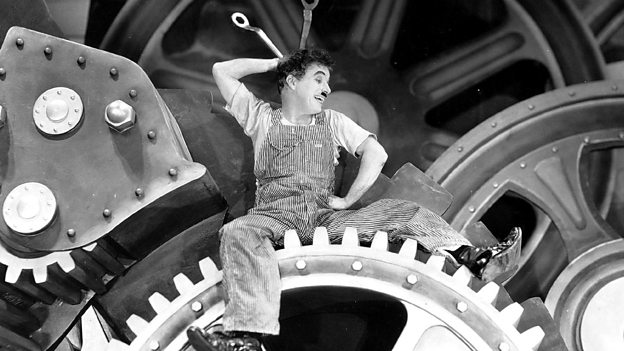
MODERN TIMES with LIVE BBC SCOTTISH SYMPHONY ORCHESTRA at the CITY HALLS GLASGOW

For the very first time in Scotland the classic Charlie Chaplin film was shown with a full live orchestra playing the score written by Chaplin himself, restored and conducted by Timothy Brock.
This was to commemorate the 100th anniversary of the first screen appearance of the famous tramp character in film.
The film was one of the last great silent films made in an era when sound was taking over.Originally planned as an audio film Chaplin realised that the silent approach would create a better impact for his theme of the ordinary little man taking on the system of elites , who are the only ones granted the privilege of sound in the film critique of industrialised complex versus the citizen.

The musical score itself took over six months to complete , when ten days is the norm even today.Chaplin would play chords on his violin , tap out the notes on piano whilst his musical assistant arranger would convert the score into readable music for a large orchestra of over sixty four players.Though convoluted and requiring expertise help , it is very fair to say the score is Chaplins own work.

This review from The Scotsman sums up the historical evening.
"Such was the authentically Hollywood-style sweep and the velvety sonic sheen to the orchestra’s playing, not to mention Brock’s effortlessly impeccable synchronisation with the images (he clearly knew both the movie and the music inside out), that the score seemed to flow directly from the screen. It was only the bright immediacy of the sound and the vivid colours that Brock drew from the BBC SSO players – who were on top form, and seemed to relish the score’s lush melodies and sometimes frenetic rhythms – that reminded you there was a live band playing at all."


Wednesday, June 4, 2014

THE COUNT OF MONTE CRISTO at the WEBSTERS THEATRE

Glasgows newest theatre welcomed a musical adaptation of the Alexandre Dumas tale of Betrayal , Honour and Revenge set to a heavy rock soundtrack.
Ive only been to one musical since i went to four Broadway ones , especially Jekyll and Hyde which skipped the dialogue to go straight into songs ,  and a light Opera in a three day spell ,ultimately suffering a severe bout of Too-Many-Musicals-Fatigue-Syndrome from which i still suffer an aversion to this day.
It has been so long i had forgotten the etiquette of applauding after each song , a somewhat disjointed and incongruous practice as if we should clap Hamlet whenever he successfully delivers a soliloquy without mishaps.
The good thing about this was the quality of dialogue between songs.A very impressive performance for only ten days rehearsal time.
The lead actor tells the background of the play in this Evening Times article.

"Alex and Webster's Theatre boss Pete Sneddon initially developed The Count as a period piece.
"But after seeing Macbeth, I realised this re-setting into a dirty, grungy, gritty world really worked. It brought people down to the basics of humanity.
"And it gave me the idea; why not set the Count in this post apocalyptic world?"
Alex, 27, explains: "We've taken the story and the characters out of the world of the book. This new world is set after a major war and there are only little pockets of survivors.
"These characters, in that context, are all very selfish. Even though there has been a great catastrophe, they are still holding onto their own past."

Sunday, June 1, 2014

MY NAME IS.... at the TRON GLASAGOW

I remember the time when this story broke out in the press as this blurb explains "A captivating new play about love, family and shifting identities.
My Name is… tells the story behind a story that fleetingly hit headlines in 2006 and continues to resonate throughout the UK and beyond.
When 12-year old Gaby disappeared from her home in Scotland, the media announced that her Pakistani father, Farhan, had kidnapped her. The spiraling headlines were only momentarily silenced when it emerged that Gaby may have fled of her own accord, choosing to spend her life in Pakistan. To her Scottish mother Suzy's great distress, Gaby declared, 'my name is Ghazala' and turned her back on 'Gaby' and seemingly the West...
This moving verbatim play reveals a unique Scottish love story that began in early 80s Glasgow, a world away from the frantic ‘tug of love’ well documented in the world's press.
Tamasha is an award-winning theatre company. Successes like East is East, The Trouble with Asian Men and Snookered have won acclaim from audiences and critics alike."

The play was an intense experience in which sympathy and empathy and a compassion for the human side of all the characters comes out , this website of the play production company also contains an introductory video of the play.

In this video in which the cast members discuss the play we come ( especially at the 2mins-14 sec mark) to the original story and the guilt they feel over the casual assumptions that were automatically engendered which assumed the only reason someone could have of leaving the West for the East would be abduction or kidnap.
 

This review captures the dramatic emotional experiences that are felt by the audience throughout this genuine tragedy. 

 "Told in present day and flashback,it is Farhan and Suzy’s relationship which is the central core of the play. The first tentative courtship of a gauche ‘Gori’ teenager and her early twenties Asian boyfriend is charming, and cringingly recognisable­ sweet-­talking, bad dancing to the Bee Gees at a local Pollokshields disco and endless promises of domestic idyll, until the chasms between the cultures, often facilitated by Farhan’s conservative in­-laws, deepen. Suzy refuses to wear the veil upon her conversion, and Farhan divorces her on the grounds of apostasy, accusing her of being an unfit mother."

It has to be said if any blame is to be attached to any of the characters then it is to the Father who was the only adult in this drama and who opportunistically took advantage of the situation of taking liberties when it suited his desires and then turning dogmatically conservative when that side suited his needs.

The video below contains an in-depth interview with Arun Ghosh music and sound production